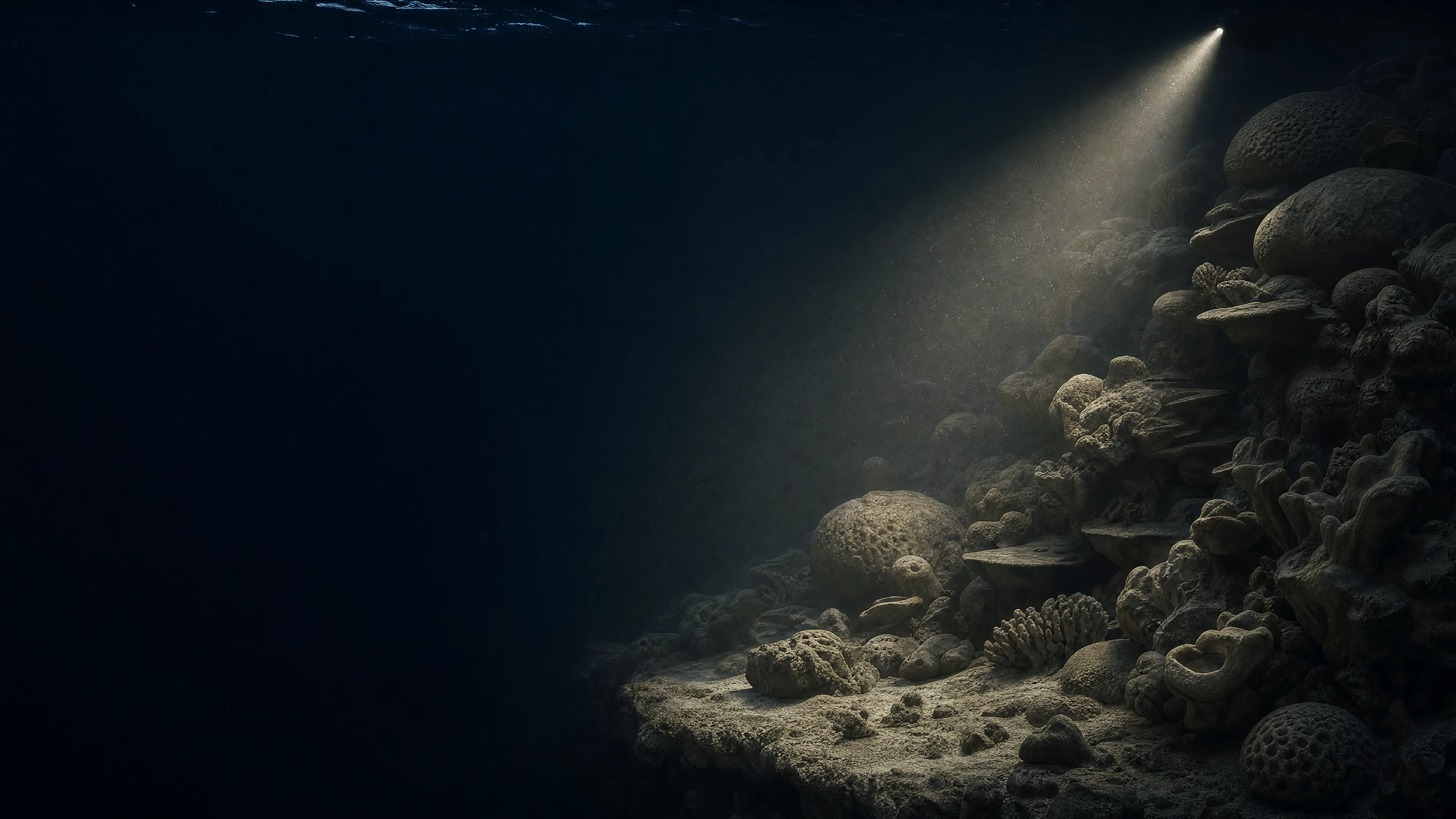
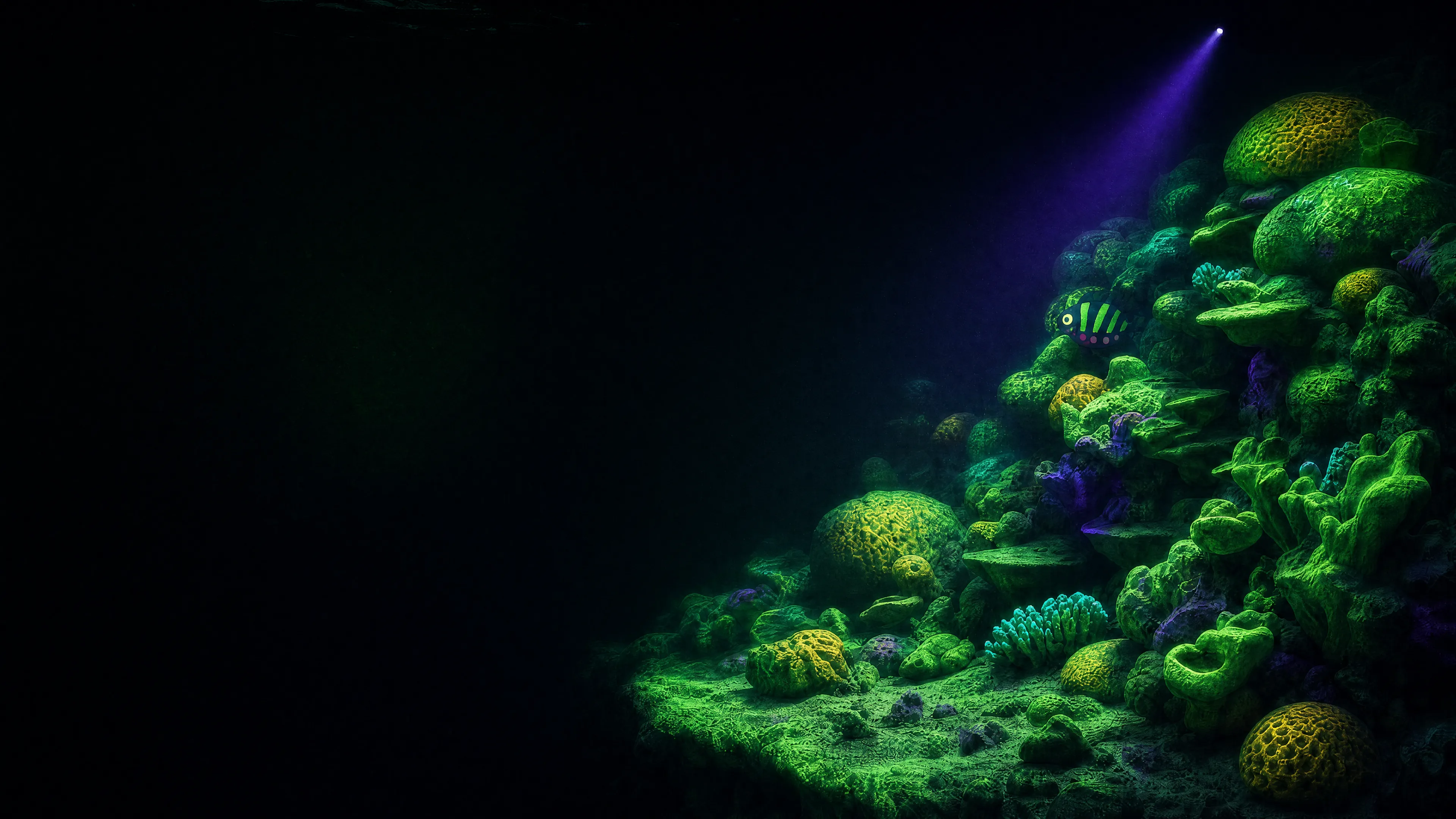
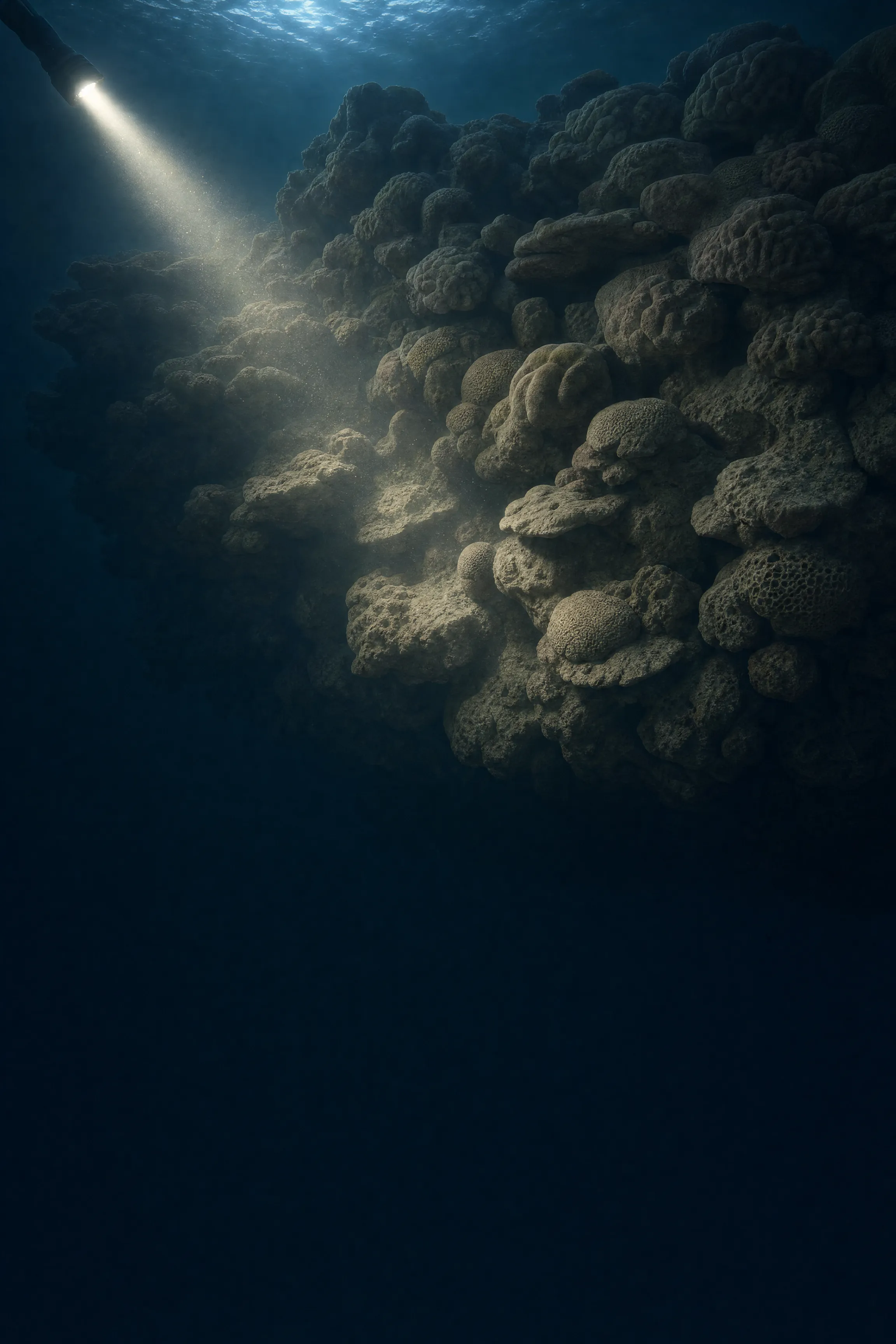
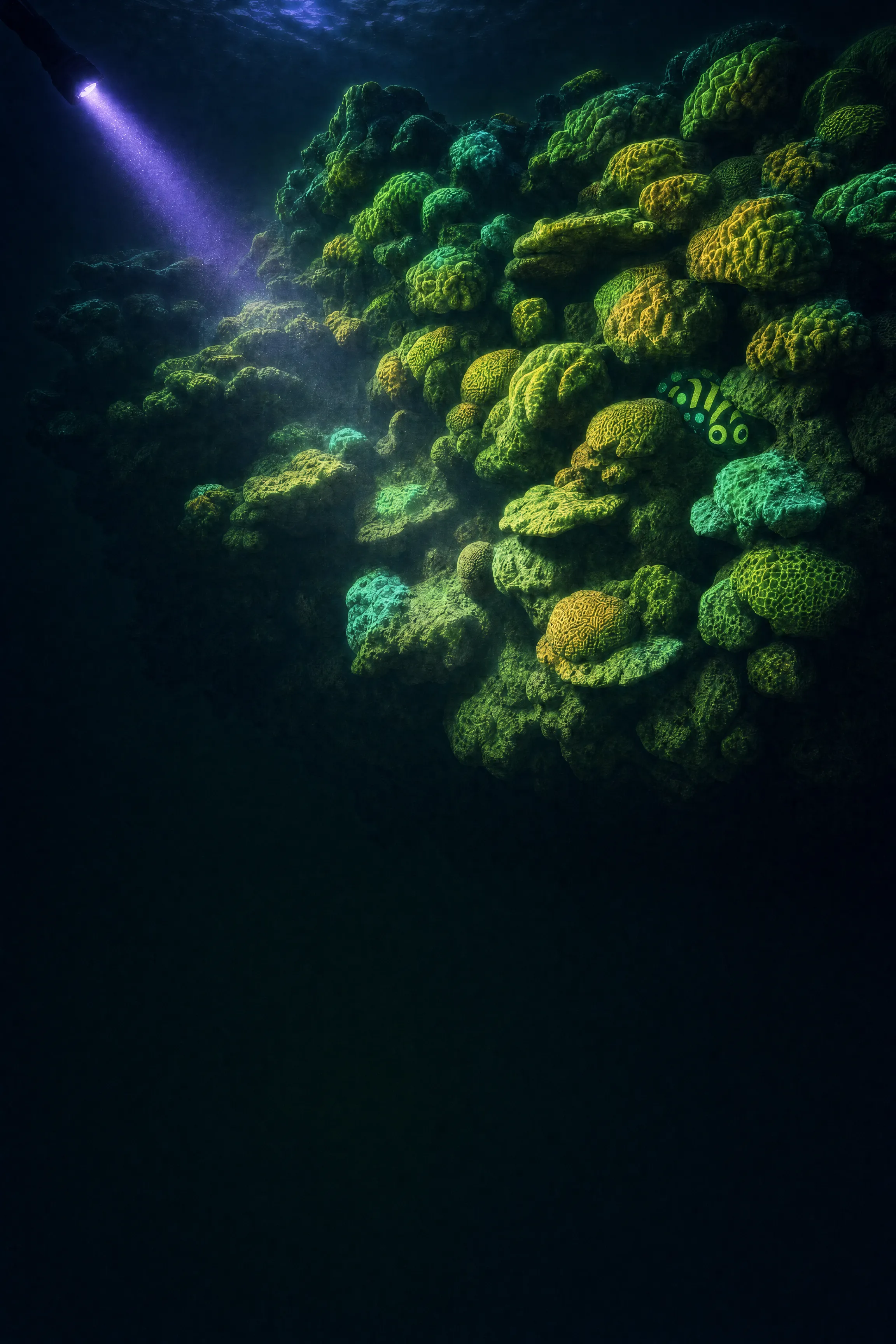
The reef is empty. It was never empty.
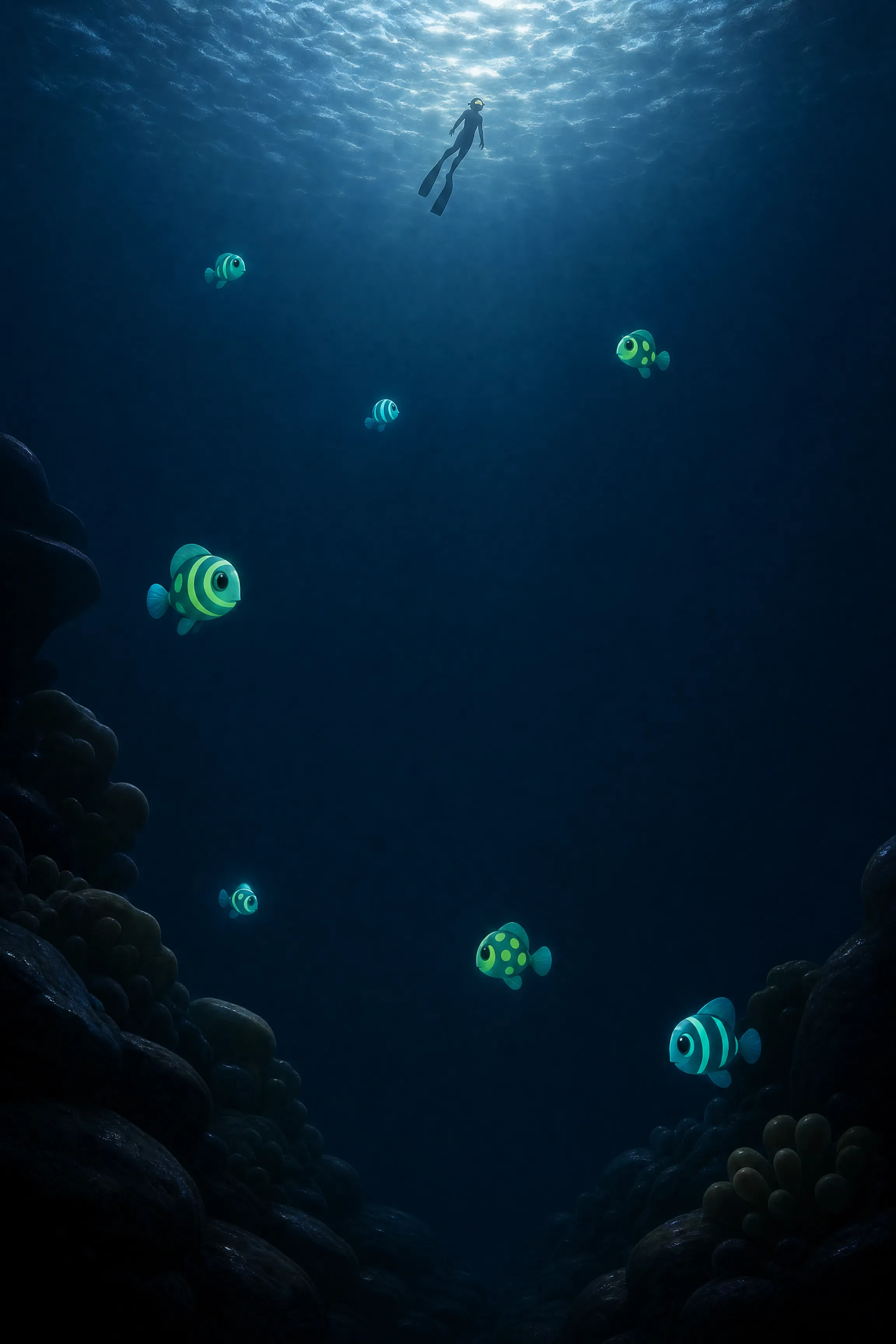
Underwater hide-and-seek, at night, off Okinawa. Your friends paint themselves in ink that is invisible under white light, then hide on the reef. You are the one holding the torch, and you have one breath to find them.
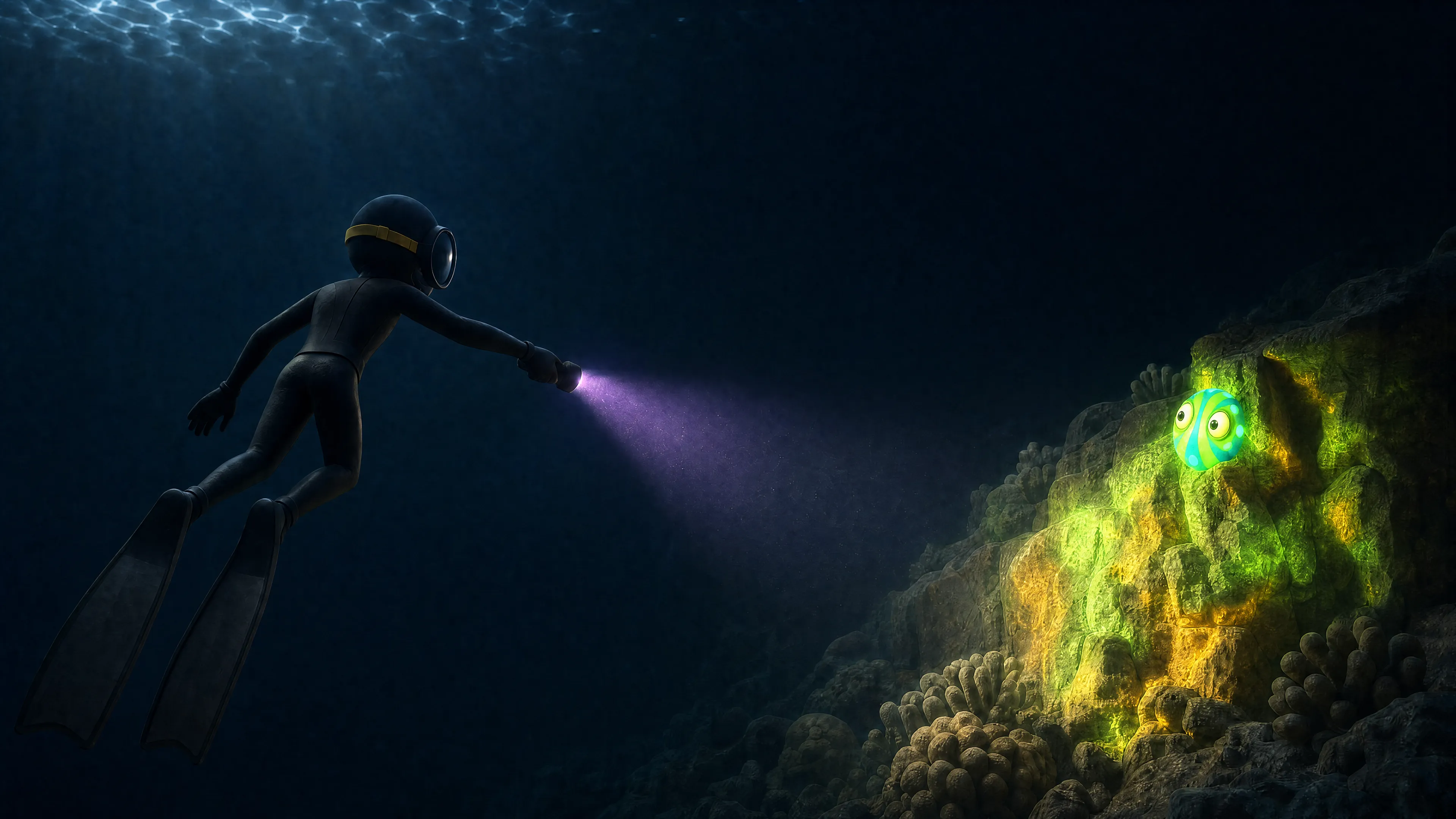
Move the torch. The reef answers.
Take your time
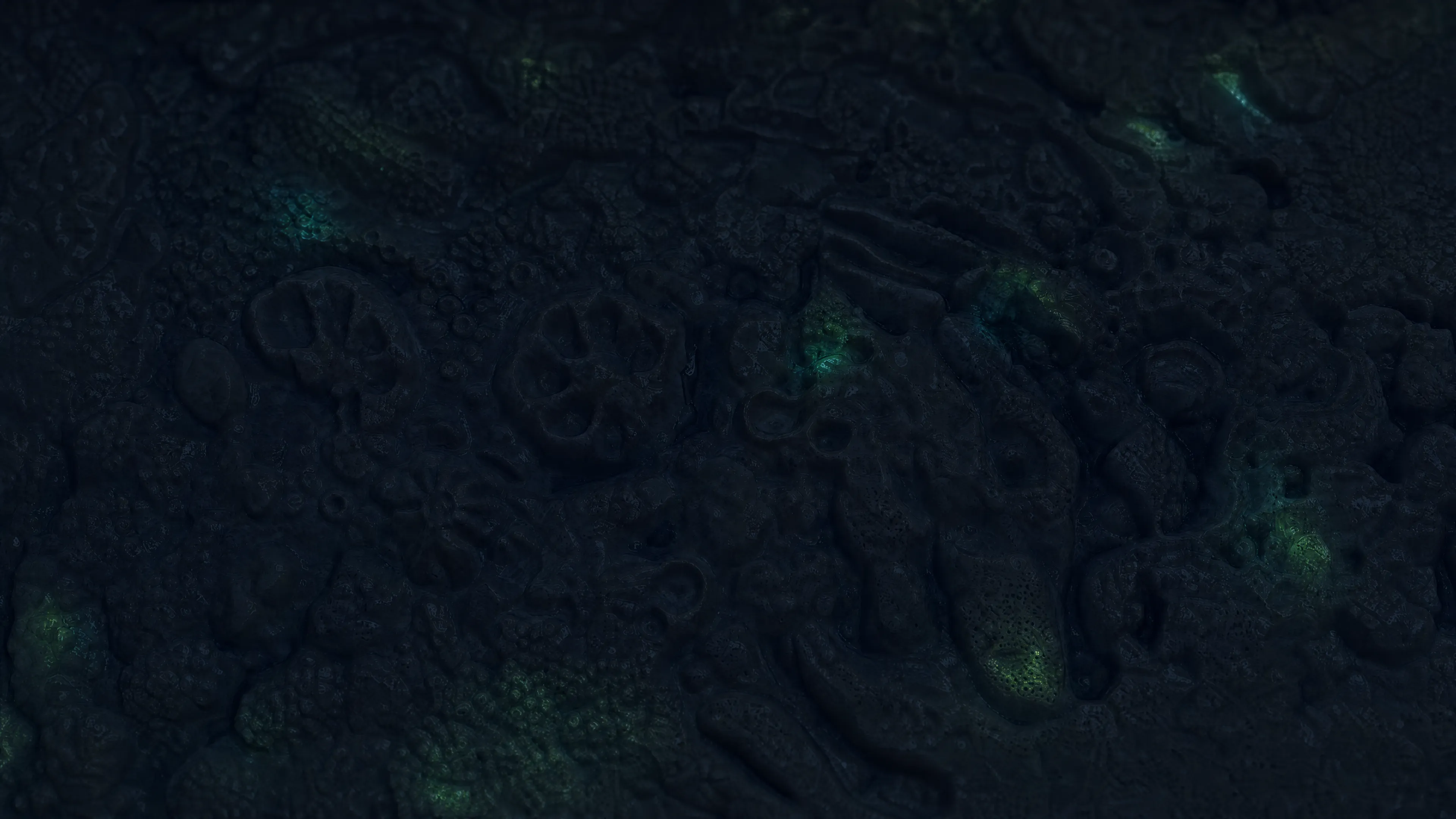
One of these corals has eyes.
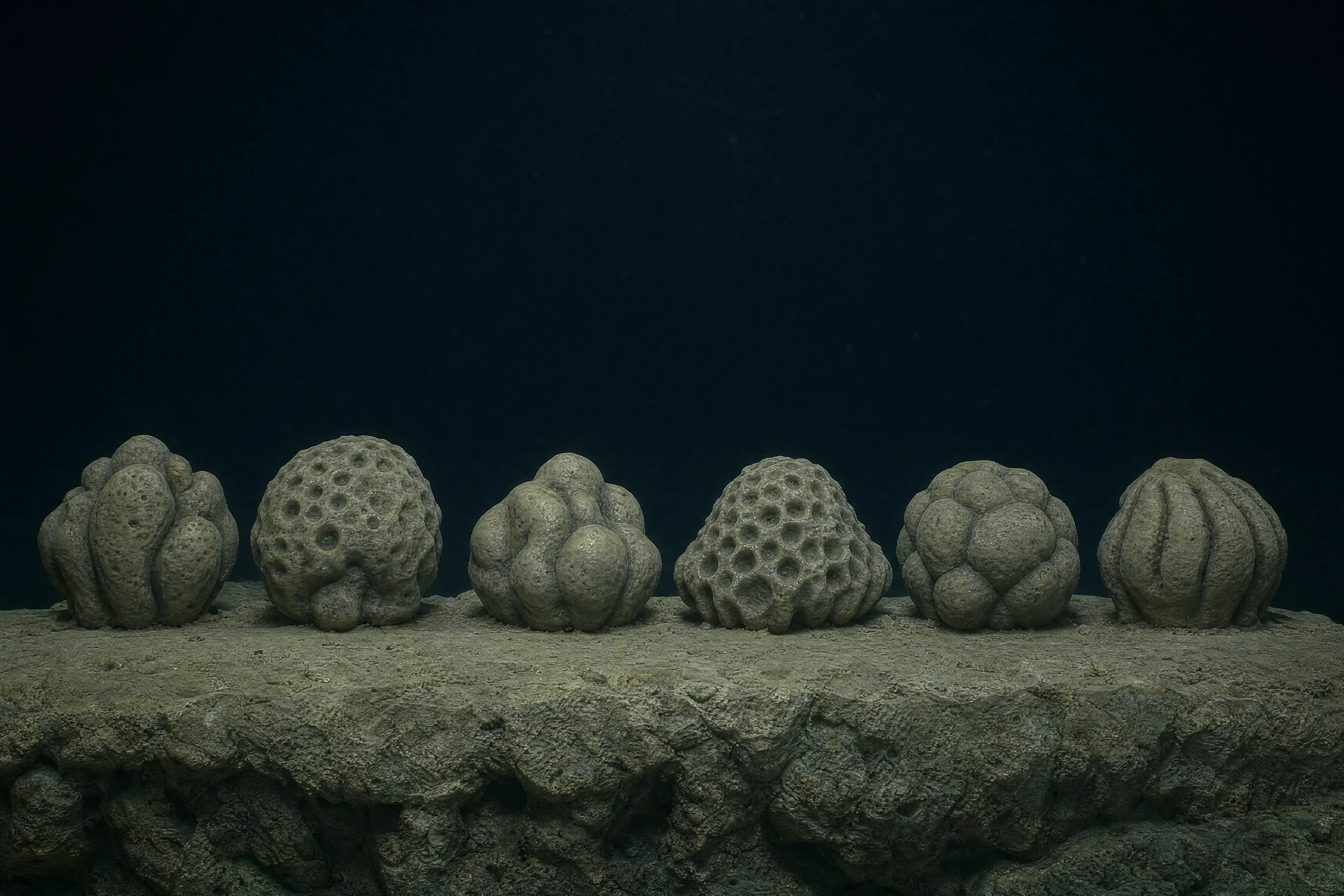
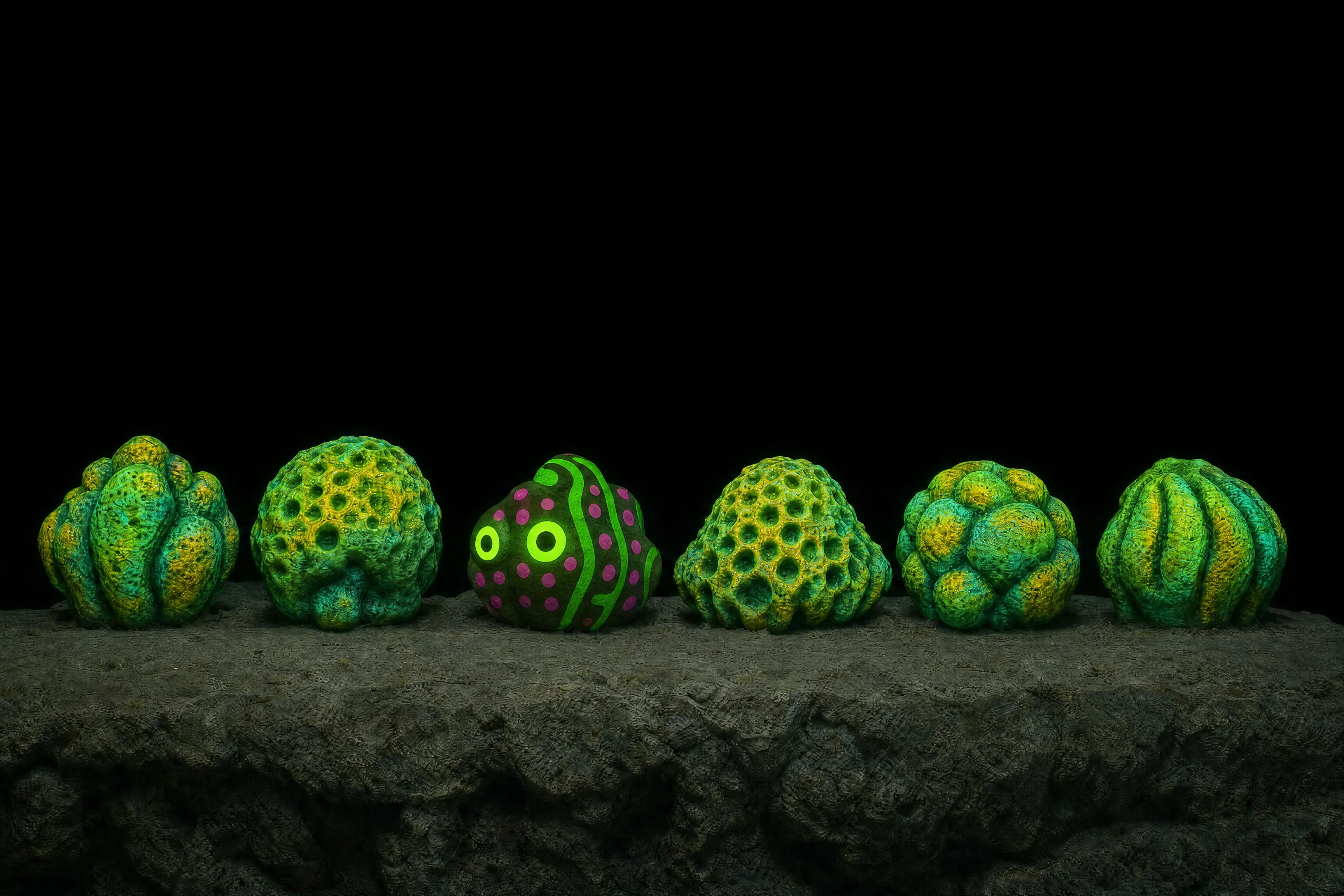
You will not find it in this light. Nobody can. That is the entire game, and it is why the torch has a second setting.It was the third one from the left. It was always the third one from the left.
In the water
Paint. Hide. One breath.
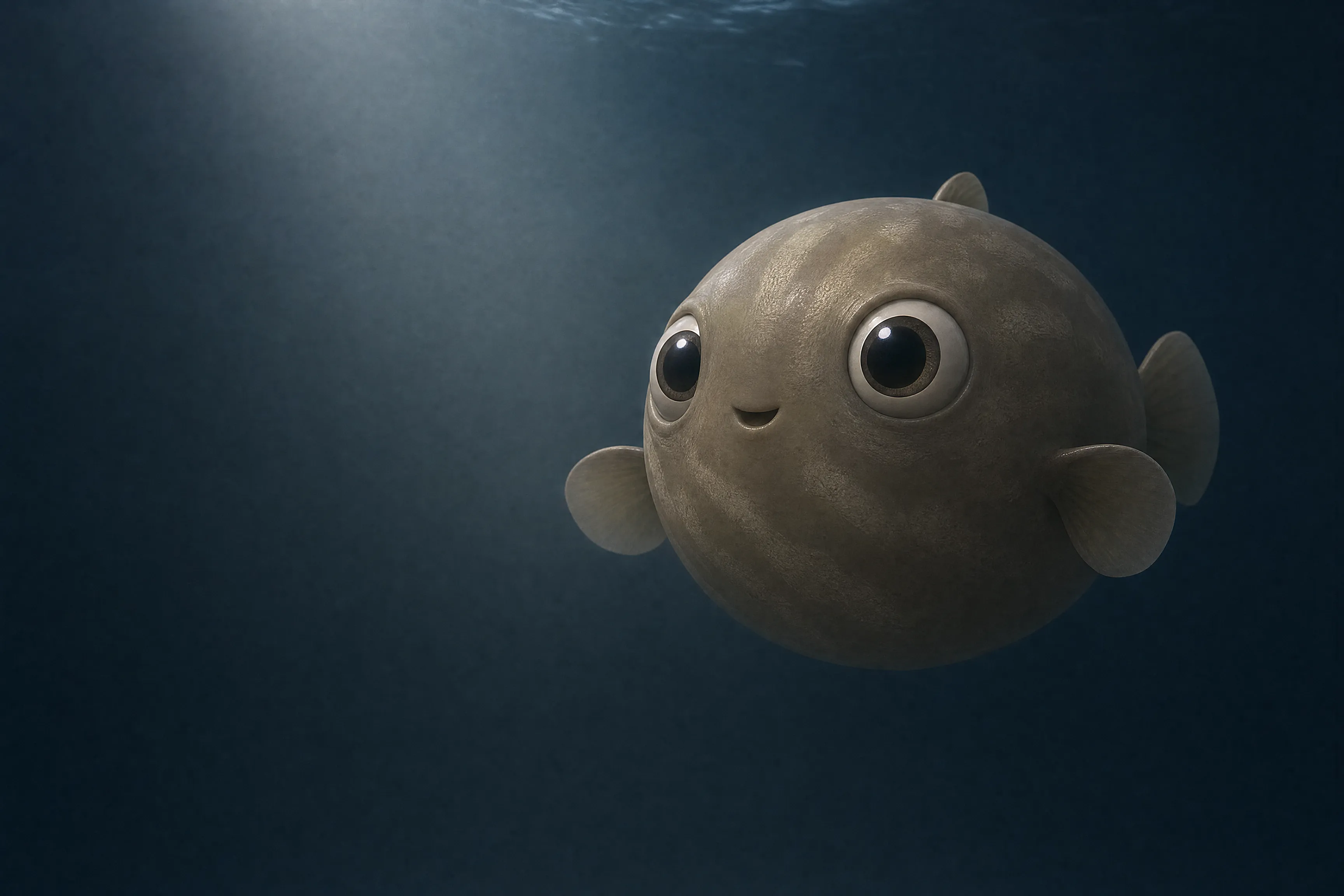
Paint anything.
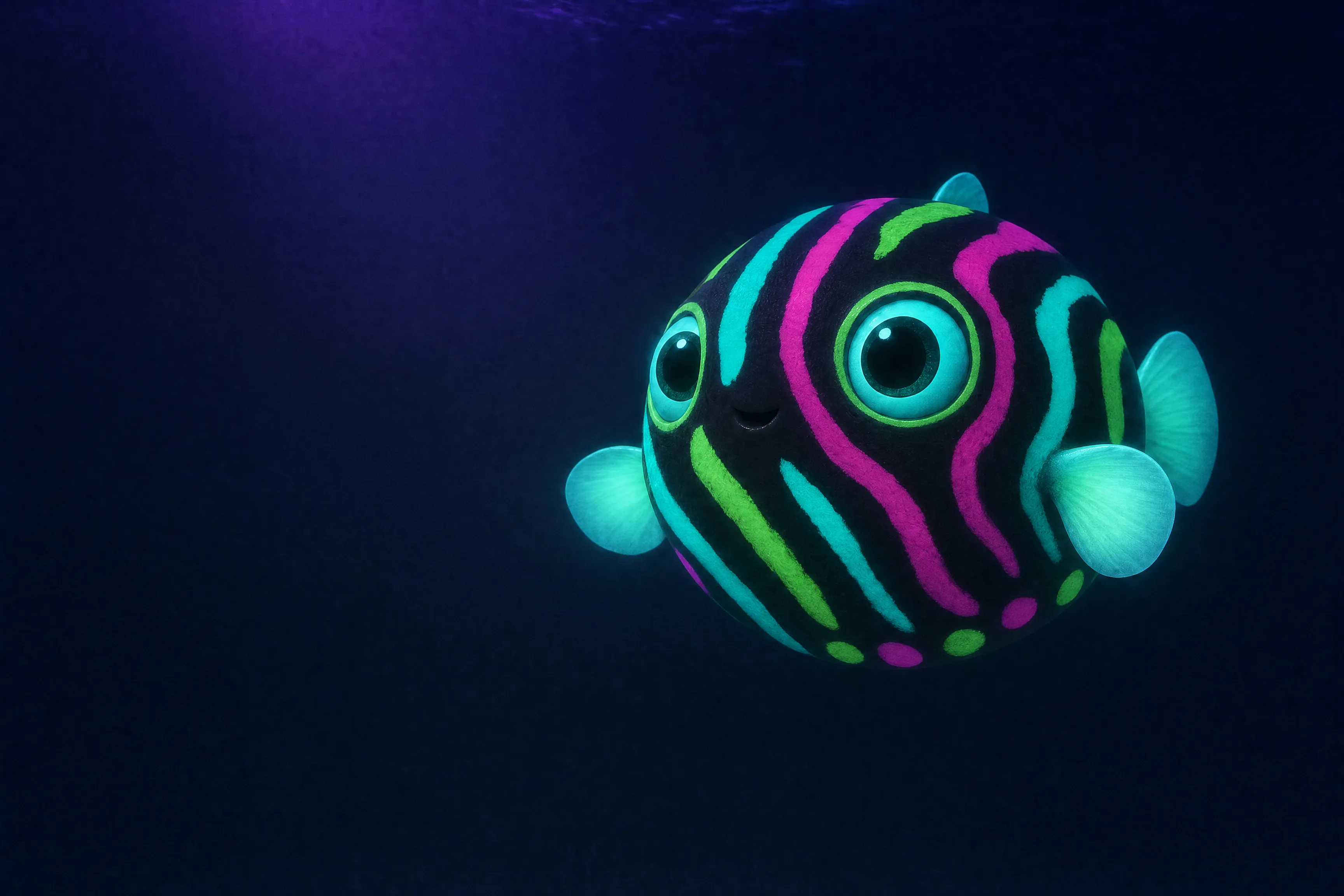
Sixteen fluorescent colours, three brushes, three saved patterns. No unlocks, no paid colours, ever. Whatever you paint is what the whole lobby sees the moment the light comes on — including the part where you got bored halfway through.
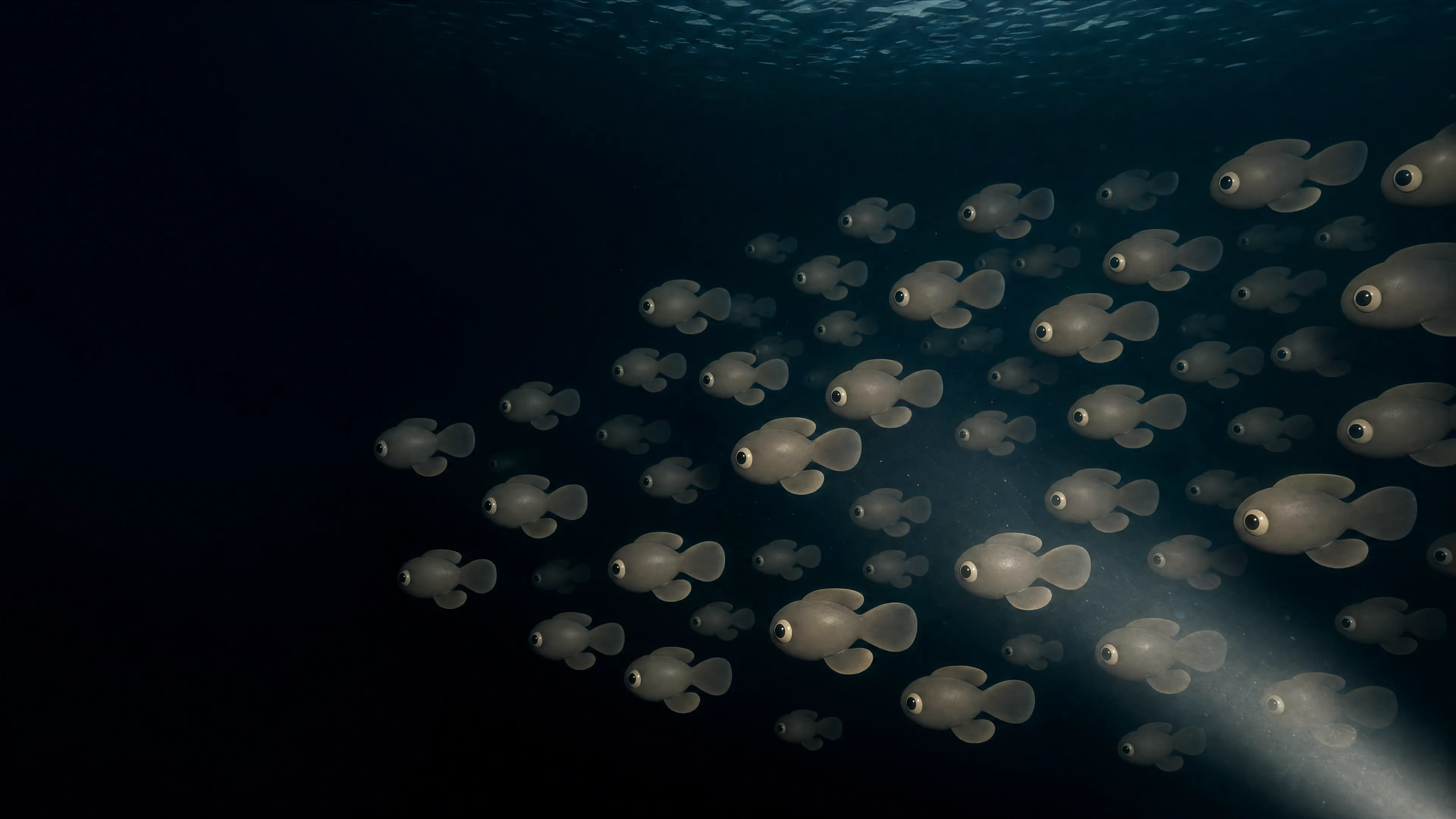
Hide anywhere.
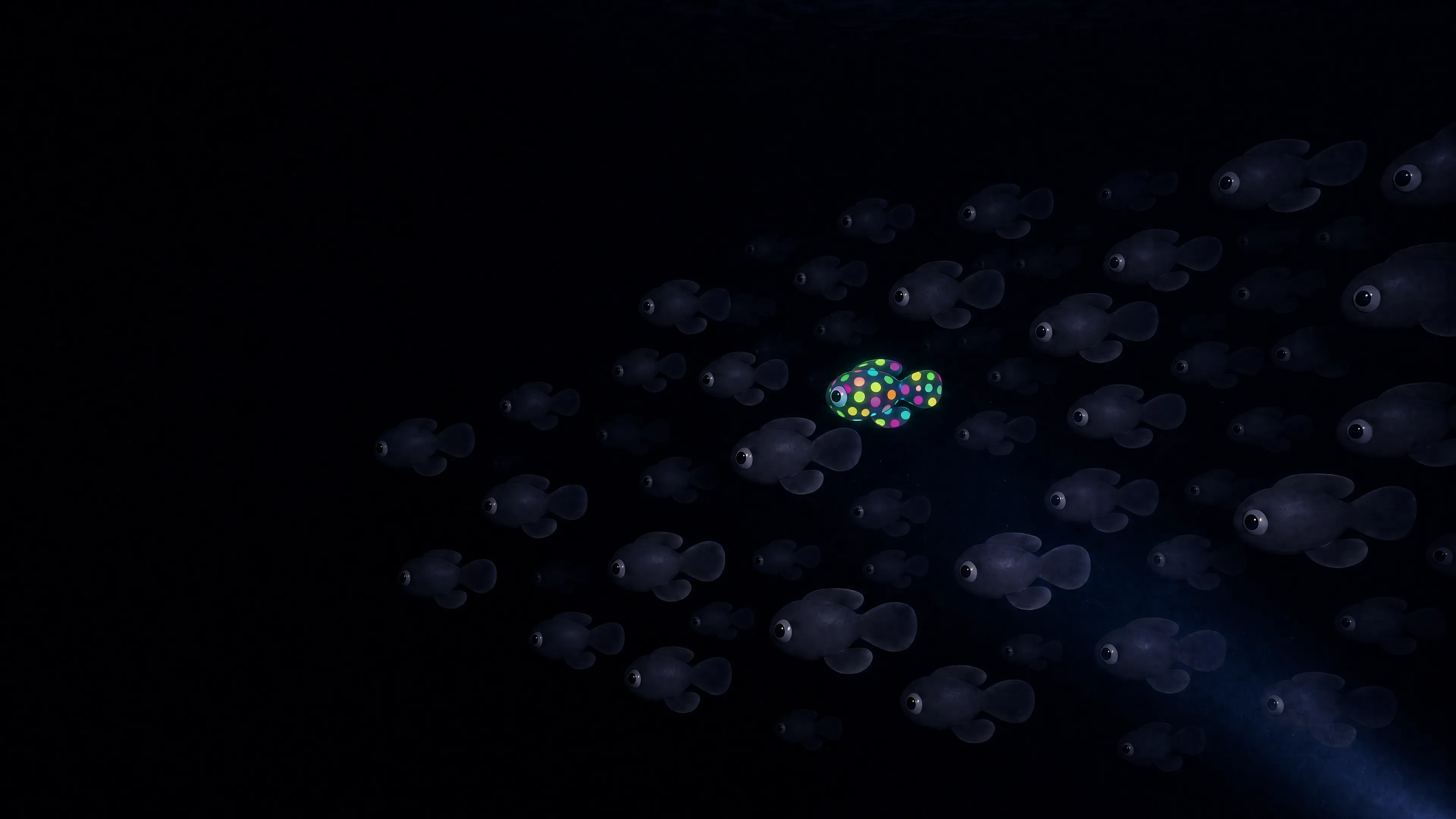
Be a coral head. Wedge yourself into a crevice. Or drift along inside a shoal of two hundred NPC fish that look exactly like you, and quietly hope nobody looks twice.
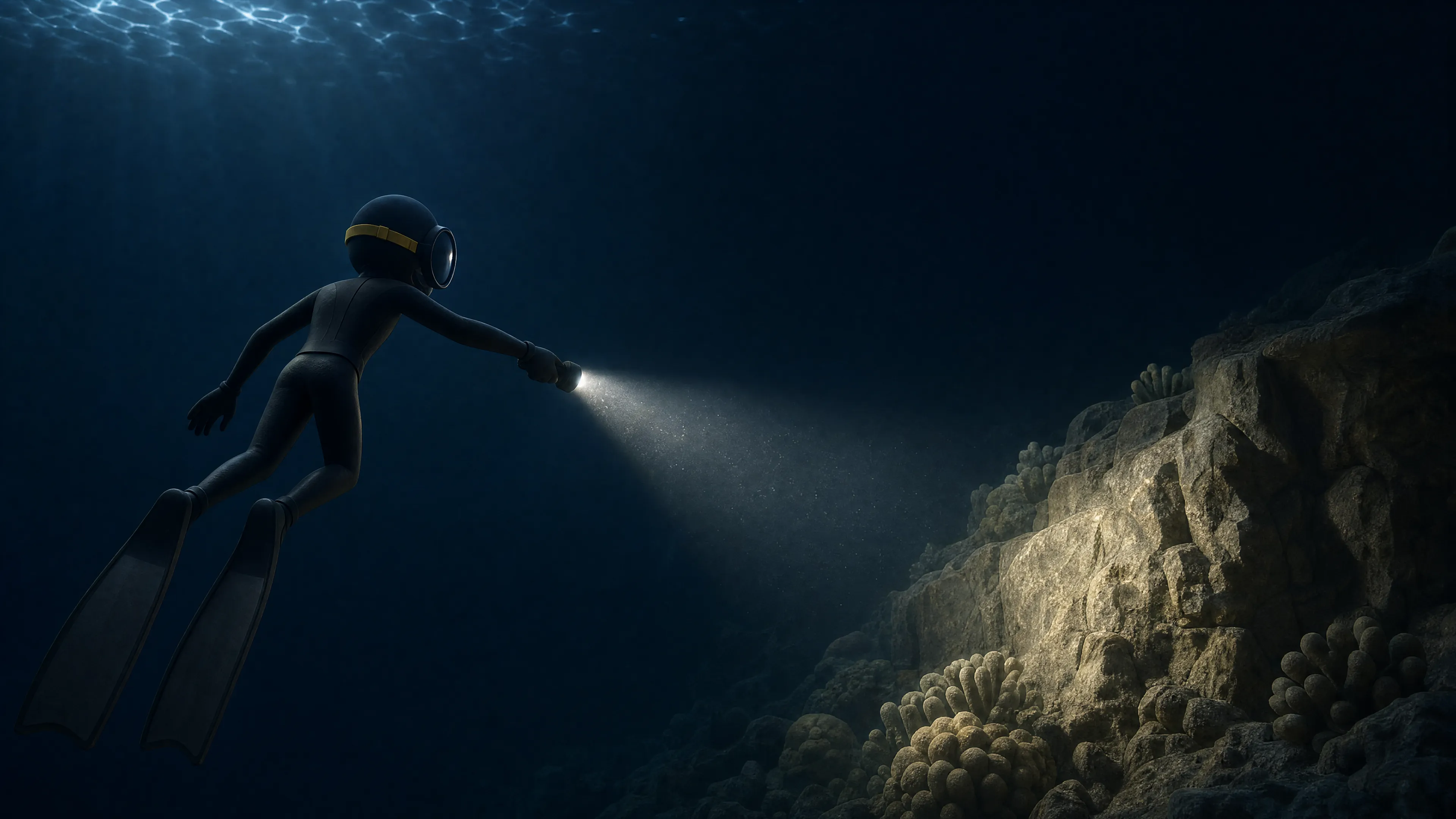
One breath.
Five dives a match. Your oxygen is the round timer and it drains faster the higher your heart rate climbs — and any fish within 2.5 metres can hear that heartbeat. Panic costs air. Greed costs air. Talking makes bubbles. Laughing makes a cloud of them.
Down there
Twelve people. One torch. Everyone lying still.
Rounds run eight to twelve minutes and almost none of it goes to plan.
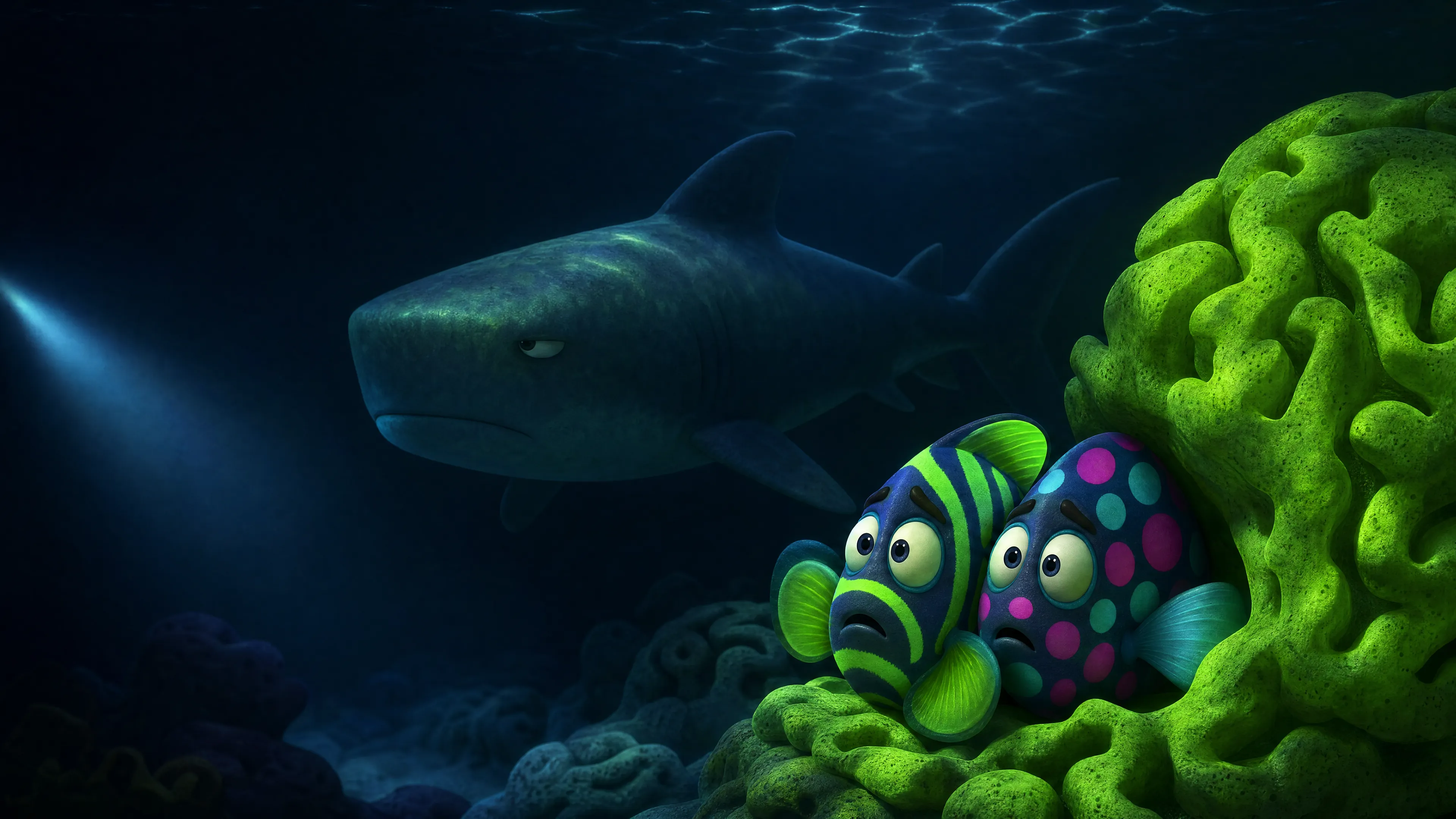
The ceasefire
Once or twice a match a reef shark comes through and, for twenty seconds, everybody has the same problem. Enemies end up behind the same coral head. Nobody talks about it afterwards.
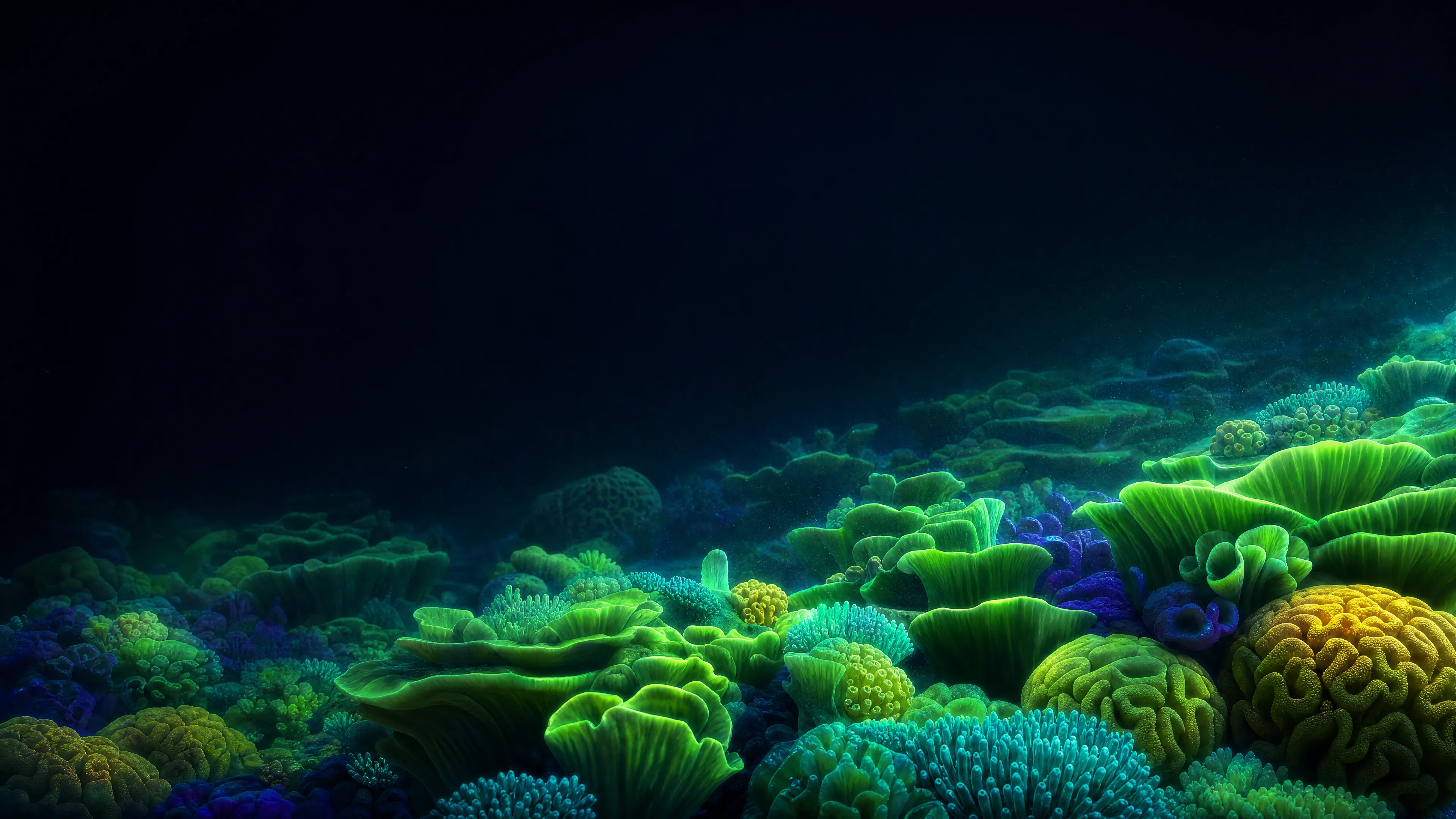
The reef is not scenery
Roughly a third of the coral is shaped so it could plausibly be a person. The environment is playing the game too, and it is better at it than you are.
Afterwards
Both of you get something to post.
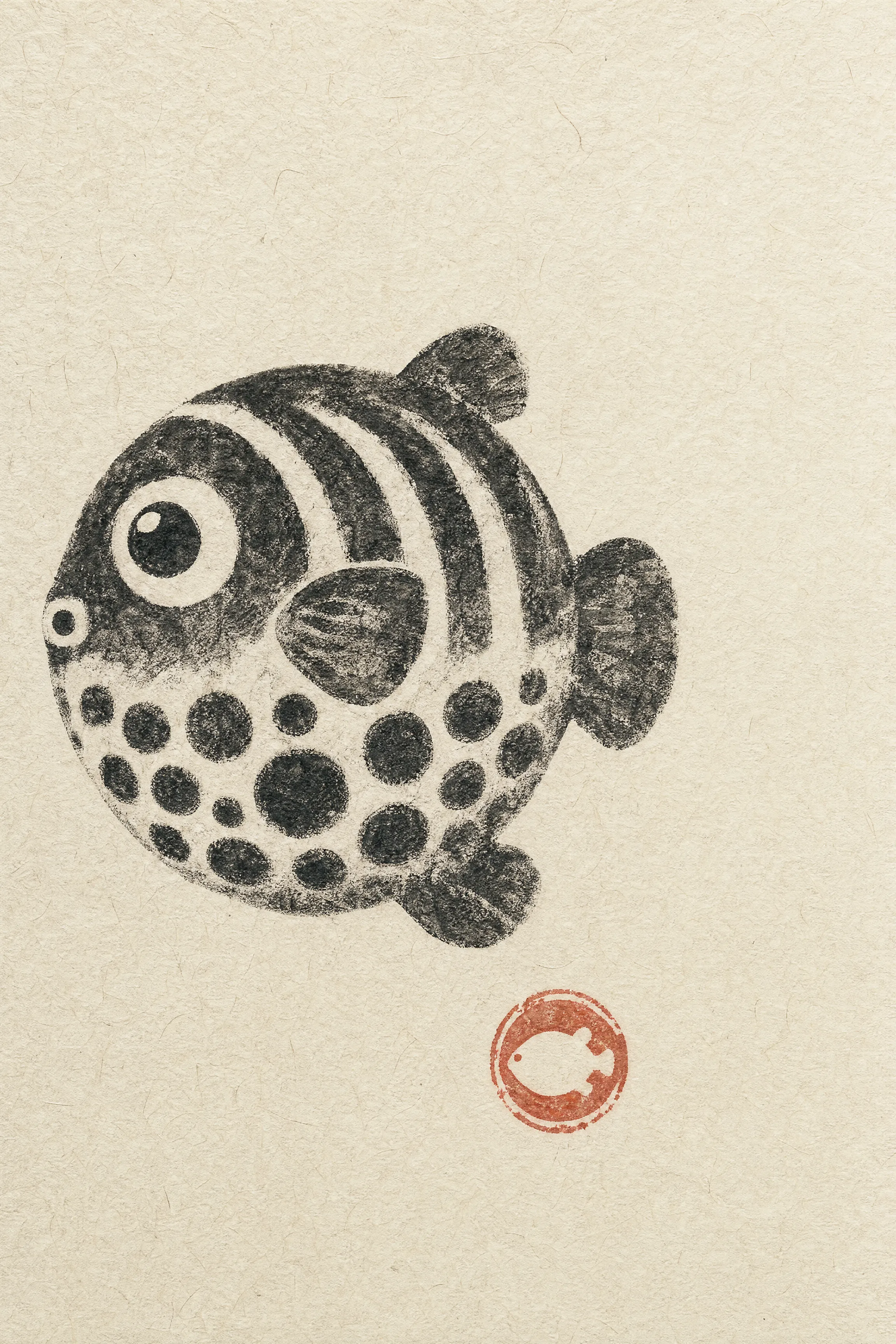
The catch
Every catch prints a gyotaku card — a Japanese fish-rubbing that uses the victim’s own painted pattern as the ink. Their work, their souvenir, your name on it.
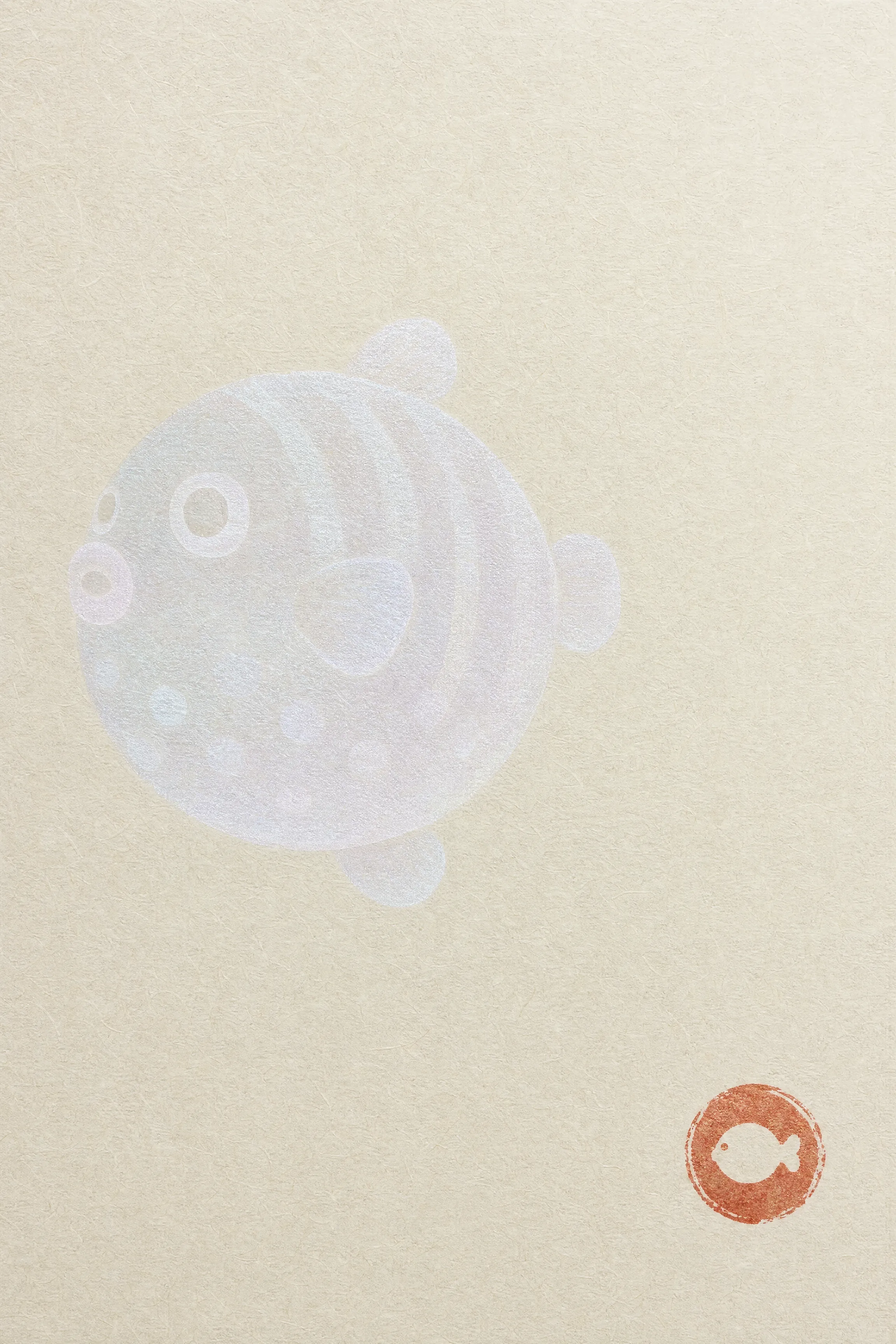
The one that got away
Every fish that escapes gets a ghost print in mother-of-pearl, stamped 逃. It is quieter, and it is arguably the better-looking of the two.
The winner and the loser both leave with a trophy. That is on purpose.
Flip the light and look again: the prints do not change. Paper does not glow. They are the only things down here that look the same in both.
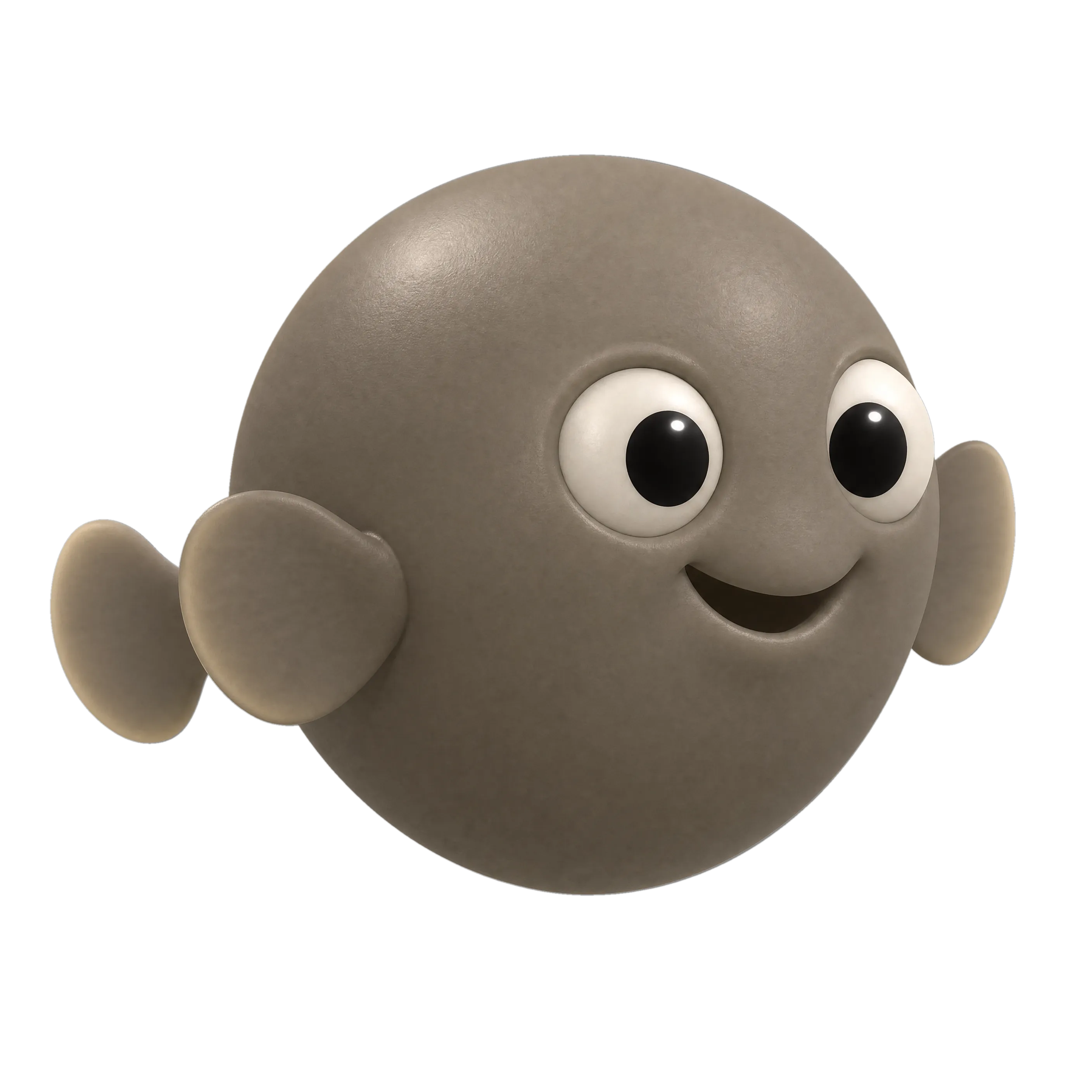
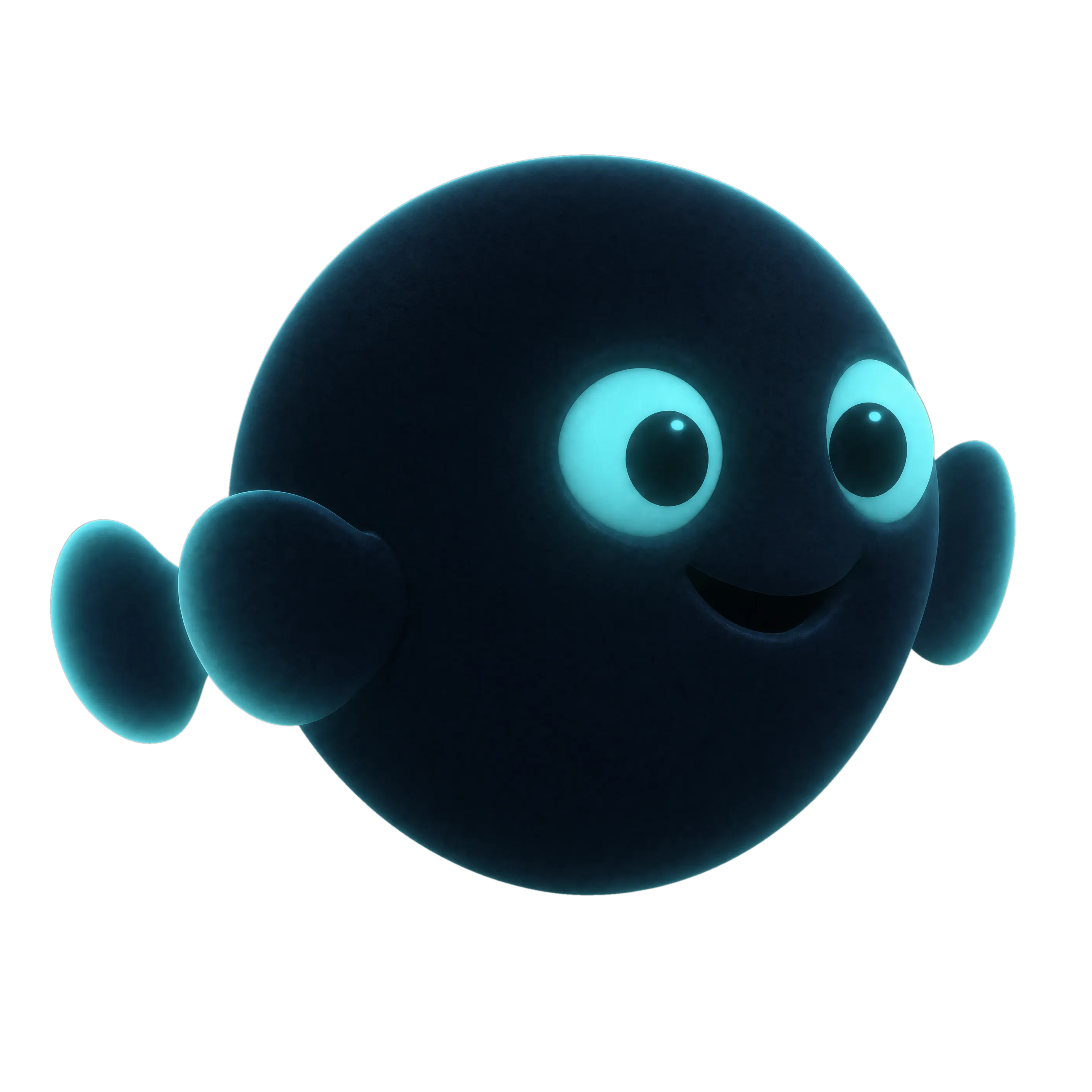
The Dive Log
While you wait, paint one.
Same toggle, same inks, same rule that the light decides what is real. Paint a fish, flip the torch, and watch your pattern print onto washi paper as a gyotaku rubbing. About ninety seconds.
Free, no account, no email. The card is yours the moment you make it.
Open the Dive LogFounding patterns carry no gameplay effect. Never a colour, never a slot, never a stat.
Next
Where this goes
Four ways in, in order of how much they ask of you. The first one is free and takes a second.
- No accountPaint a fishThe Dive Log. Free, instant, no account — and you keep the card.
- Steam accountWishlist on SteamWishlisting is what gets you told the day it is playable, and it is the single most useful thing you can do for a game this small.Not open yet
- One clickRequest playtest accessReal builds, in waves, before launch. Record and post anything you like — there is no NDA.Not open yet
- Account + joinJoin the DiscordThe playtest lottery, the pattern gallery, and direct contact with the person making it.Not open yet
Who made this
Built by an actual spearo.
The first map is Okinawa because that is where I night-dive. Fluorescent diving is real: corals genuinely glow under UV, scorpionfish genuinely fluoresce red, and every fact in the in-game almanac was checked by someone who has been down there in the dark.
Never freedive alone. Shallow-water blackout is real — one up, one down.